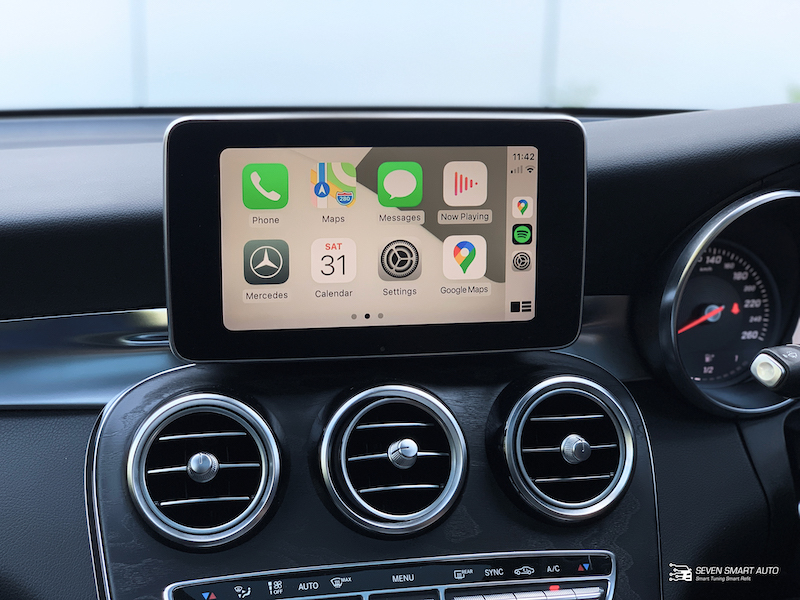




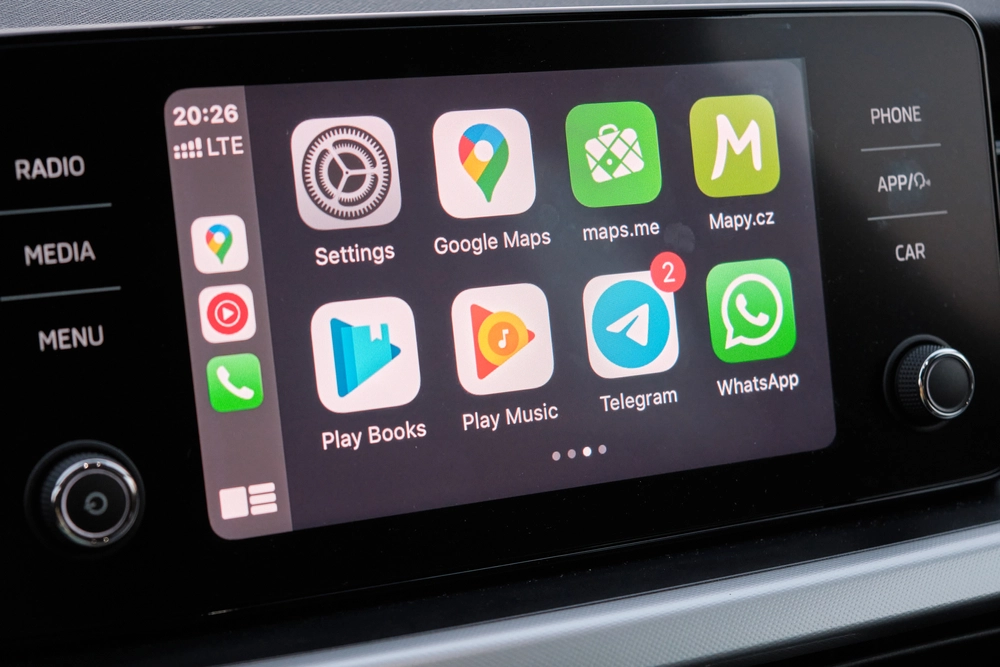
Imagine this: you’re cruising down the highway, music flowing, navigation precisely guiding you, and a glance at your dash confirms a new message without ever touching your phone. This isn’t a futuristic dream; it’s the seamless, intuitive experience of Apple CarPlay. It transforms your car’s infotainment system into an extension of your iPhone, bringing your favourite apps and features directly to your dashboard. But before you dive headfirst into this digital driving utopia, a crucial question looms: “How much does it cost to install Apple CarPlay?”
Many drivers love the idea of CarPlay but hesitate because of price or setup concerns. This guide explains how much it really costs to install Apple CarPlay, comparing Apple CarPlay installation options, Apple CarPlay head unit pricing, labour costs, and alternatives like Android Auto, so you can make a confident decision. Get ready to understand the true cost of bringing Apple’s intelligent driving companion into your life.
The Reality of Apple CarPlay’s Price Tag
Let’s cut to the chase: there’s no single, fixed price for Apple CarPlay. It’s not like buying a specific app from the App Store. Instead, the cost is a dynamic range influenced by a multitude of factors, much like buying a house. You wouldn’t expect a studio apartment in a rural town to cost the same as a mansion in a bustling city, right? CarPlay is similar. Your existing vehicle, your desired features, your comfort level with DIY projects, and even your geographic location all play a significant role in determining the final bill.
The reality is that you could spend anywhere from under $100 for a basic adapter to well over $1,500 for a premium, professionally installed head unit with all the bells and whistles. This broad spectrum can be intimidating, but it also means there’s a CarPlay solution for nearly every budget and need. Our goal here isn’t just to list prices, but to help you understand why these prices vary so much, empowering you to pinpoint the option that offers the best value for your specific situation.
Unpacking the Core Cost Components of Apple CarPlay
To truly understand the “how much,” we first need to break down the “what.” CarPlay isn’t a singular product; it’s a feature that can be integrated into your vehicle through several distinct pathways, each with its own cost implications. Think of these as different avenues to the same destination; some are direct, some are scenic, and some require a bit of construction.
1. Factory-Installed CarPlay
When you buy a brand-new car, Apple CarPlay often comes either standard or as an optional extra, frequently bundled into a technology package. This is arguably the most seamless way to get CarPlay, as it’s designed from the ground up to integrate perfectly with your vehicle’s existing systems, controls, and aesthetics.
The “cost” here isn’t always an explicit line item, especially if it’s standard. If it’s an option, however, it might add anywhere from $300 to $1,500+ to the vehicle’s purchase price, often alongside other features like larger touchscreens, premium audio systems, or advanced driver-assistance features. For instance, a basic trim might not include it, but moving up to the next trim level or adding a specific tech package will. The beauty of factory installation is its flawless integration; the downside is that you can only get it if you’re buying a new car or if your existing car already has it. If you’re considering a new car, this is often the path of least resistance for CarPlay.
2. Aftermarket Head Units
For those who aren’t buying a new car but crave CarPlay, an aftermarket head unit (the central display and control panel in your dashboard) is often the most comprehensive solution. Think of your existing car stereo as an old flip phone; an aftermarket head unit is like upgrading to a smartphone. These units replace your car’s existing stereo system entirely and come equipped with CarPlay built in.
The cost for these units varies significantly based on features, screen size, brand reputation, and audio quality. You can find basic single-DIN or double-DIN units (referring to standard stereo sizes) starting around $200-$300. These will offer essential CarPlay functionality. Step up to units with larger, high-resolution displays, wireless CarPlay capabilities, built-in navigation, advanced audio tuning, or integration with factory steering wheel controls, and you’re looking at $500 to $1,000, or even more for top-tier brands like Pioneer, Kenwood, Alpine, or Sony.
Beyond the head unit itself, you’ll likely need some accessory parts for a proper installation: a wiring harness adapter (to connect the new unit to your car’s existing wiring), a dash kit (to ensure the new unit fits seamlessly into your dashboard opening), and potentially an antenna adapter or a steering wheel control interface. These parts can add another $50-$200 to your total, depending on your vehicle’s specific requirements. The installation itself, whether DIY or professional, is another cost component we’ll delve into later.
3. Software Activation
This is perhaps the sneakiest and most frustrating “cost” for some drivers. Certain car manufacturers, notably BMW in the past, have offered CarPlay as a feature that’s technically present in the car’s hardware but requires a one-time fee or even a subscription to “activate.” It’s like buying a new laptop with software pre-installed, but needing to pay to unlock its full functionality.
While this trend has largely shifted towards including CarPlay as standard or a one-time purchase, it’s still worth investigating if you own a newer vehicle where CarPlay is advertised as an option. The cost here could range from $150 to $300 for a one-time activation, and some older models even had annual subscription fees (though these are thankfully becoming rare). Always check with your dealer or manufacturer to see if your car’s existing hardware can be unlocked for CarPlay before considering more drastic aftermarket solutions.
4. CarPlay Adapters
For cars that already have a factory infotainment screen but lack CarPlay, or for those with wired CarPlay who yearn for wireless connectivity, an adapter can be a fantastic, cost-effective solution. These devices typically plug into your car’s USB port (for wired CarPlay adapters) or act as a pass-through for your existing wired CarPlay connection (for wireless adapters).
A wired CarPlay adapter often uses a device like a “CarPlay AI Box” that runs a version of Android and can project CarPlay onto your existing screen. These can range from $100 to $300. Wireless CarPlay adapters, which convert your existing wired CarPlay connection into a wireless one, are generally simpler and more affordable, often falling in the $50 to $150 range.
The primary benefit of adapters is their simplicity and lower cost. They don’t require replacing any major hardware, and installation is usually plug-and-play. However, they might not offer the same level of seamless integration or display quality as a dedicated aftermarket head unit or a factory-installed system. They’re a brilliant option for those seeking convenience without a major overhaul.
Factors That Drive the Cost of Apple CarPlay Up or Down
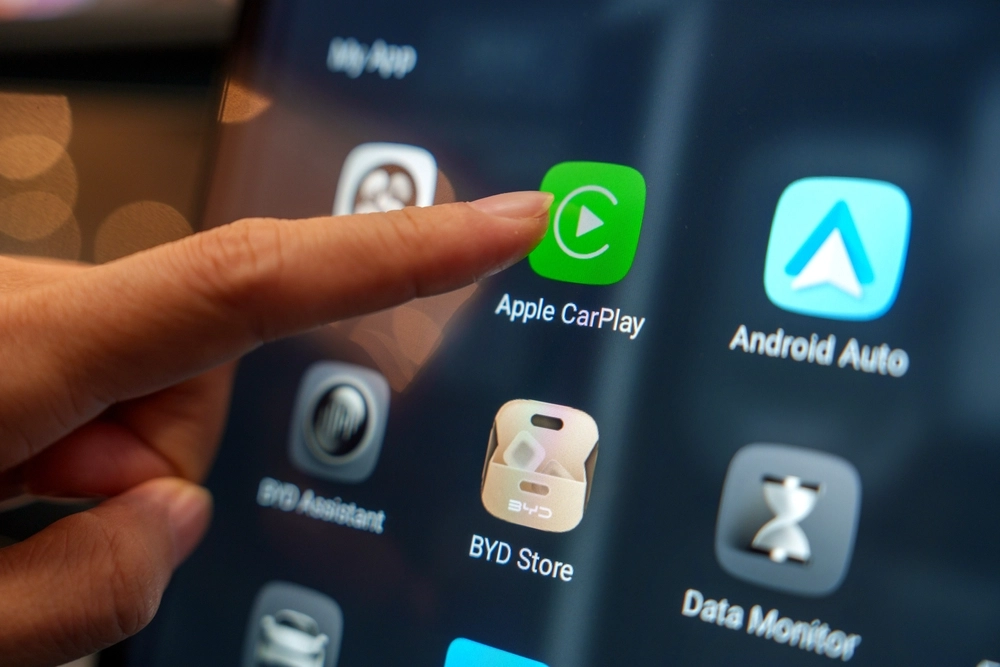
Understanding the core components is step one. Now, let’s explore the forces that can significantly sway the price pendulum. Think of these as the variables in our CarPlay cost equation; each one contributes to the final sum, sometimes subtly, sometimes dramatically.
Vehicle Compatibility
This is perhaps the single most impactful factor. Some cars are a dream for CarPlay installation, while others are a nightmare (or simply impossible).
- Older Cars (Pre-2000s): These vehicles often lack standard DIN openings, modern wiring harnesses, or robust electrical systems, making aftermarket installation more complex and potentially requiring custom fabrication, which drives up labour costs.
- Cars with Integrated Systems: Many modern cars have highly integrated dashboards where the radio, climate control, and other functions are deeply intertwined. Replacing the head unit in such a vehicle might require expensive integration modules to retain factory features, or it might be impossible without losing essential car functions. This can add hundreds of dollars to the cost of parts alone.
- Cars with Existing Screens: If your car has a non-touch screen or a very basic display, but it’s not a standard stereo size, finding an aftermarket solution might be limited to an adapter or a specialised, vehicle-specific aftermarket unit, which tends to be more expensive than universal units.
- Newer Cars (with factory-wired CarPlay): If your car already has wired CarPlay, upgrading to wireless is often the cheapest option (a $50-$150 adapter). If it has the hardware but needs activation, that’s also relatively inexpensive.
The bottom line: The more your car deviates from a standard, easily replaceable single or double-DIN stereo opening, the higher the cost is likely to be.
Installation Complexity
This factor directly influences whether you can save money by doing it yourself or if you’ll need to shell out for professional labour.
- Simple Installs: If your car has a standard single or double-DIN opening and separate climate controls, a head unit swap can be relatively straightforward. It involves removing a few dash panels, disconnecting the old unit, connecting the wiring harness and dash kit to the new unit, and reassembling. This is often DIY-friendly.
- Moderate Complexity: Cars with integrated systems, steering wheel controls, or factory amplifiers will require additional interfaces (like a steering wheel control adapter or an amplifier integration module). These add parts cost and increase installation time and difficulty, pushing many towards professional help.
- High Complexity: Vehicles requiring custom fabrication of dash bezels, extensive wiring modifications, or the installation of parking brake bypasses (for certain features) are definitely in the “professional installation strongly recommended” category. The labour costs for these can easily exceed the cost of the head unit itself.
A good rule of thumb: If you’re comfortable disassembling parts of your dashboard and understanding basic wiring diagrams, DIY might be an option. If the thought makes you break into a cold sweat, factor in professional installation.
Feature Set
Just like any electronic device, more features generally translate to a higher price.
- Wireless vs. Wired CarPlay: Wireless CarPlay head units are typically more expensive than their wired counterparts. The convenience of not plugging in your phone every time you get in the car comes at a premium, usually adding $100-$200 to the head unit’s price.
- Screen Size and Resolution: Larger, higher-resolution, and capacitive touchscreens (like on your phone) are more expensive than smaller, resistive touchscreens.
- Audio Quality: Head units with advanced digital signal processors (DSPs), higher pre-amp outputs, and more extensive equalisation options will cost more, appealing to audiophiles.
- Additional Features: Built-in GPS navigation (separate from CarPlay’s map apps), multiple camera inputs (front, rear, side), HD Radio tuners, DVD/CD players (less common now), and smartphone mirroring (beyond CarPlay) all contribute to a higher price tag.
- Brand-Specific Integration: Some higher-end head units offer deeper integration with specific car models, which can also drive up costs.
Brand and Quality
As with most electronics, brand reputation and perceived quality play a significant role in pricing.
- Premium Brands: Companies like Pioneer, Kenwood, Alpine, and Sony are leaders in the aftermarket car audio space. They offer high-quality components, robust software, excellent customer support, and often more advanced features. Their head units typically occupy the mid-to-high end of the price spectrum ($400-$1000+).
- Mid-Range Brands: Brands like JVC, Boss Audio, or Jensen often provide good value, offering solid CarPlay functionality at more accessible price points ($200-$500).
- Budget/No-Name Brands: A plethora of cheaper units, often found on Amazon or eBay, promise CarPlay for under $200. While some might work adequately, many come with compromises in screen quality, software stability, sound processing, and long-term reliability. Buyer beware here; sometimes, saving a buck upfront leads to frustration down the road.
Investing in a reputable brand generally ensures better performance, durability, and a smoother user experience.
Location and Labour
If you opt for professional installation, the cost of labour will be a significant component, and this varies geographically.
- Hourly Rates: Car audio shops in major metropolitan areas with higher costs of living will typically charge more per hour ($80-$150+) than those in smaller towns ($50-$100+).
- Flat Fees: Many shops offer flat fees for head unit installation, but these fees will often reflect their prevailing hourly rates and the complexity of the job. A basic single-DIN install might be $75-$150, while a more complex job could be $200-$400 or more, not including custom fabrication.
- Dealer vs. Independent Shop: Car dealerships might offer to install aftermarket CarPlay units, but their labour rates are almost always higher than those of independent car audio specialists.
Always get multiple quotes for professional installation to compare prices and ensure you’re getting a fair deal.
Breaking Down the Numbers: A Cost Spectrum
Now that we understand the variables, let’s put some concrete numbers to the different scenarios you might encounter. This isn’t a rigid price list, but rather a guide to help you estimate what you might spend.
The Budget-Conscious Approach: Under $200
This segment is for those who prioritise minimal investment or already have some existing infrastructure.
- Wireless CarPlay Adapter (for existing wired CarPlay): This is the ultimate budget move if your car already has wired CarPlay but you want to cut the cord. Expect to pay $50 – $150. Simply plug it into your car’s USB port, pair your phone, and enjoy wireless CarPlay.
- Entry-Level Aftermarket Head Unit (wired CarPlay): If you’re replacing a very basic factory radio in an older, simpler car, you might find some no-name or lesser-known brands offering wired CarPlay units for around $150 – $200. These will often have resistive touchscreens, basic audio features, and may require some compromises on build quality.
- Used/Refurbished Aftermarket Head Unit: With some savvy shopping on sites like eBay or Crutchfield’s outlet, you might snag a reputable brand’s wired CarPlay unit for under $200. This requires careful vetting of the seller and product condition.
- Basic CarPlay AI Box (for existing non-CarPlay screen): These Android-based boxes can sometimes be found in the $100-$200 range, allowing you to project CarPlay onto an existing factory screen. Integration can be hit-or-miss depending on your car.
Total Estimated Cost (DIY): $50 – $200 (plus any basic wiring harness/dash kit, maybe $20-$50 if needed for a head unit).
The Mid-Range Sweet Spot: $200-$600
This is where the majority of aftermarket CarPlay solutions land, offering a solid balance of features, quality, and affordability.
- Reputable Wired CarPlay Head Unit: High-quality units from brands like Pioneer, Kenwood, Sony, or JVC, with good screens, better audio processing, and reliable wired CarPlay, typically fall in the $250 – $450 range. These are often double-DIN units.
- Entry-Level Wireless CarPlay Head Unit: For the convenience of wireless CarPlay without breaking the bank, you can find entry-level units from reputable brands starting around $350 – $550.
- CarPlay AI Box (higher quality): A more robust CarPlay AI Box with better software and display quality will typically cost $200 – $400.
- Parts for Aftermarket Installation: Factor in an additional $50 – $200 for wiring harnesses, dash kits, antenna adapters, and potentially a basic steering wheel control interface.
- Professional Installation (basic): If your car is straightforward, professional installation might add another $75 – $150.
Total Estimated Cost (DIY): $250 – $600 (for unit + parts)
Total Estimated Cost (Professional Install): $325 – $750 (for unit + parts + labour)
The Premium Experience: $600-$1500+
This tier is for those who want the best integration, advanced features, superior audio, or have a particularly challenging vehicle.
- High-End Wireless CarPlay Head Unit: Units with large, high-resolution capacitive touchscreens, advanced audio tuning (DSP, high-volt pre-outs), multiple camera inputs, built-in navigation, and seamless integration features will command prices from $600 – $1200+. Brands like Alpine, Flagship Pioneer, or Kenwood eXcelon series often feature here.
- Vehicle-Specific Aftermarket Units: Some companies offer bespoke CarPlay solutions designed specifically for certain car models, often replacing the entire factory infotainment screen with a larger, more modern display. These can range from $500 – $1000+ for the unit alone.
- Premium Parts & Integration Modules: If your car has a complex factory sound system, fibre optic cables, or deeply integrated climate controls, you might need expensive integration modules that cost $200 – $500+ on top of the head unit.
- Professional Installation (complex): For complex installations involving custom fabrication, extensive wiring, or integration with intricate factory systems, labour costs can easily reach $300 – $700+.
- Factory-Installed CarPlay (as an option on a new car): While not an aftermarket cost, remember this can add $300 – $1500+ to the vehicle’s purchase price, often bundled with other tech.
Total Estimated Cost (DIY): $600 – $1500+ (for unit + parts, assuming you have the advanced skills for complex installs).
Total Estimated Cost (Professional Install): $900 – $2200+ (for unit + parts + complex labour)
This spectrum clearly illustrates that CarPlay is accessible at various price points, but the more features you desire, the more complex your vehicle, or the more you rely on professional help, the higher your investment will be.
DIY vs. Professional Installation: What’s Your Skill Level?
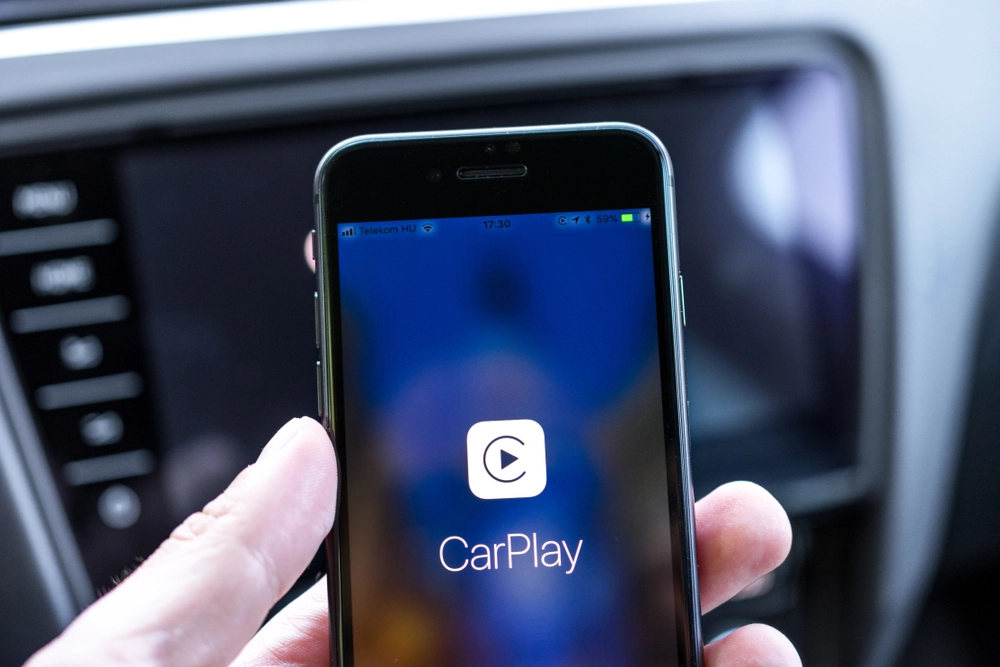
This is often the pivotal decision point, where you weigh potential cost savings against convenience, expertise, and your own aptitude for hands-on work.
DIY Apple CarPlay Installation: Benefits and Considerations
The primary motivator for a DIY CarPlay installation is, without a doubt, cost savings. Professional labour can easily add $75 to $500 or more to your total bill, depending on complexity. If you’re confident in your abilities, doing it yourself means that money stays in your pocket.
Beyond the financial aspect, there’s a certain satisfaction that comes with successfully completing a project yourself. You’ll gain a deeper understanding of your vehicle’s interior, its wiring, and how everything comes together. For those who enjoy tinkering with cars or electronics, it can be a rewarding experience. There are countless online resources, YouTube tutorials, car-specific forums, and detailed guides that can walk you through nearly every step. Companies like Crutchfield even offer free vehicle-specific installation guides and lifetime technical support with your purchase.
However, DIY isn’t for everyone. It requires patience, a basic understanding of automotive wiring (or at least the ability to follow instructions meticulously), and a willingness to disassemble parts of your car’s interior. You’ll also need some basic tools: screwdrivers, trim removal tools (highly recommended to avoid damage), wire strippers/crimpers, and potentially a multimeter. If you make a mistake, you could damage dash components, short out electrical systems, or end up with a non-functional stereo, which then necessitates a professional fix anyway, often at a higher cost due to troubleshooting.
Consider DIY if:
- Your vehicle has a straightforward single or double-DIN stereo opening.
- You’re comfortable with basic electrical connections and disassembling interior trim.
- You have access to good online resources and a few hours to dedicate to the project.
- You’re willing to troubleshoot potential issues yourself.
When to Call in the Pros
For many, the peace of mind offered by professional installation is well worth the added expense. Car audio specialists have the experience, tools, and expertise to handle a wide range of vehicles, from the simplest to the most complex.
They can often foresee potential integration issues that a DIYer might overlook and know how to properly integrate steering wheel controls, backup cameras, and complex factory amplifiers. A reputable installer will also typically offer a warranty on their labour, providing assurance that if anything goes wrong post-installation, they’ll fix it. This is invaluable, especially with the intricate electronics of modern vehicles.
While the cost is higher, you’re paying for expertise, efficiency, and a guarantee. They’ll likely complete the job much faster than you could, and you won’t have to worry about accidentally damaging your dashboard or creating electrical problems.
Call in the Pros if:
- Your vehicle has a highly integrated dashboard, complex wiring, or a non-standard stereo opening.
- You’re uncomfortable with automotive electronics or disassembling your car’s interior.
- You want a factory-like finish without any visible gaps or damage.
- You value a warranty on the installation work.
- You simply don’t have the time or patience for a DIY project.
Ultimately, the choice between DIY and professional installation hinges on your personal skill set, your budget, and your comfort level with potential challenges. Be honest with yourself about your abilities to avoid a frustrating and potentially costly learning experience.
Is Apple CarPlay Worth the Investment?
We’ve talked a lot about money, but the true value of Apple CarPlay extends far beyond its price tag. It’s an investment in convenience, safety, and modern connectivity. Let’s explore why it’s more than just another gadget.
Enhanced Safety
This is arguably CarPlay’s most compelling benefit. By mirroring essential iPhone apps directly onto your car’s built-in display, CarPlay significantly reduces the temptation to pick up your phone while driving. All key functions, navigation, music, messaging, and calls are accessible via a large, easy-to-read touchscreen, physical controls, or, most importantly, Siri voice commands.
Instead of fumbling with a small phone screen, squinting at directions, or trying to change a song, you can simply say “Hey Siri, navigate home,” “Play my driving playlist,” or “Read me my new message.” This hands-free, eyes-on-the-road approach is invaluable for minimising distractions and making your drive safer for everyone. It integrates your digital life into the driving experience in a responsible way.
Seamless Integration
CarPlay transforms your car into a true extension of your digital ecosystem. Your favourite navigation apps (Apple Maps, Google Maps, Waze), music streaming services (Spotify, Apple Music, Pandora), podcasts, audiobooks, and messaging apps (Messages, WhatsApp) are all there, familiar and intuitive.
There’s no learning curve for new, clunky car-specific software. If you know how to use your iPhone, you know how to use CarPlay. This seamless integration means your playlists carry over, your saved places in maps are readily available, and communication flows naturally without interrupting your focus on driving. It’s not just a display; it’s your personalised infotainment hub, perfectly tailored to your preferences.
Future-Proofing Your Ride
Automotive technology evolves rapidly. While your car’s factory infotainment system might feel dated after just a few years, an aftermarket CarPlay unit or a car with factory CarPlay keeps you plugged into the latest software updates and app compatibility provided by Apple.
As Apple refines CarPlay with new features or app developers update their offerings, your in-car experience keeps pace. This means your vehicle’s tech stays relevant longer, offering functionality that might otherwise only be available in much newer, more expensive cars. It’s a way to inject new life and modern capabilities into an older vehicle, preventing that feeling of being technologically left behind.
Resale Value
While it’s difficult to quantify precisely, adding Apple CarPlay (especially an integrated aftermarket unit) can be a positive selling point when it comes time to sell your car. In today’s market, buyers increasingly expect modern conveniences, and a car with CarPlay immediately stands out as more desirable and up-to-date than one without.
It signals that the car has been cared for and upgraded, offering a modern feature that many drivers now consider essential. While it might not always translate to a dollar-for-dollar return on your investment, it can certainly make your car more attractive to potential buyers, potentially leading to a quicker sale or a slightly better negotiation position. Think of it as a quality-of-life upgrade that also boosts market appeal.
Considering these non-monetary benefits, the investment in Apple CarPlay often appears much more reasonable and justifiable. It’s an upgrade that enhances safety, convenience, and enjoyment every time you get behind the wheel.
Navigating the CarPlay Market: Smart Buying Tips
The world of CarPlay can be a bit overwhelming with so many options. To ensure you make a wise investment and get the most bang for your buck, here are some practical tips to guide your decision-making process.
Research Your Vehicle Thoroughly
This is the most critical first step. Before you even look at head units or adapters, understand your car.
- What type of stereo opening does it have? Single-DIN, double-DIN, or a proprietary factory unit?
- Does it have integrated climate controls or other critical functions in the radio?
- Does it have factory steering wheel controls? Are they analogue or digital?
- Does it have a factory amplifier or premium sound system?
- What year, make, and model is your car?
Websites like Crutchfield.com are invaluable here. You can enter your vehicle’s details, and they’ll show you exactly which aftermarket units fit, what additional parts you’ll need (wiring harnesses, dash kits, steering wheel control interfaces), and often provide installation instructions. This research will immediately clarify your options and potential costs.
Read Reviews
Once you’ve identified potential CarPlay solutions (whether head units or adapters), dive into user reviews. Don’t just skim the star rating; read the actual comments.
- Look for common complaints: Are there issues with software stability, screen responsiveness, or wireless connectivity?
- Check for vehicle-specific feedback: Does the unit work well in cars similar to yours?
- Evaluate long-term reliability: Are people happy with it after several months or years?
- Pay attention to customer support: How responsive is the manufacturer if issues arise?
Review sites, dedicated car audio forums, and YouTube channels often provide real-world insights that product descriptions won’t.
Compare Quotes from Multiple Installers
If you’re opting for professional installation, don’t just go with the first shop you find.
- Get at least three quotes: This helps you gauge the average cost for your specific installation.
- Ask for a detailed breakdown: What’s included in the price? Parts, labour, additional accessories?
- Inquire about warranties: Do they warranty their labour? For how long?
- Check their reputation: Look for online reviews, ask for referrals, and ensure they specialise in car audio and integration. A good installer can make all the difference.
Don’t Be Afraid to Negotiate
Especially with independent car audio shops, there might be some room for negotiation, particularly if you’re buying the head unit and getting it installed by them. Sometimes, they can offer a bundle deal or match a price you found online for the unit itself. It never hurts to ask politely.
Consider Certified Refurbished Options
For head units, certified refurbished products from reputable retailers (like Crutchfield or even the manufacturers themselves) can be an excellent way to save money. These units have often been returned, inspected, repaired if necessary, and tested to meet original factory specifications. They typically come with a warranty, making them a much safer bet than a generic used unit from a private seller. You can often get a higher-tier unit for the price of a mid-range new one.
By following these tips, you’ll approach the CarPlay market with confidence, armed with knowledge that will lead to a successful and satisfying upgrade.
The Bottom Line: Making an Informed Decision
So, how much does it cost to install Apple CarPlay? The answer depends on your vehicle, the installation method you choose, and whether you opt for DIY or professional help.
Bringing Apple CarPlay into your vehicle is a journey with several paths, each with its own cost implications. We’ve seen that the price can swing wildly, from under $100 for a simple adapter to well over $1,500 for a premium, professionally installed head unit. The “right” price isn’t a universal figure; it’s a reflection of your specific car, your desired features, your technical comfort level, and your budget.
Remember these key takeaways:
- Your Car Matters Most: Older, simpler cars are often cheaper to upgrade with aftermarket units. Newer cars with complex, integrated systems or proprietary infotainment may be more expensive, requiring specialised parts or professional installation.
- DIY Saves Labour, But Adds Risk: If you’re handy and patient, you can save a significant chunk of money on installation. But if you’re unsure, a professional offers peace of mind and often a warranty.
- Features Drive Cost: Wireless CarPlay, larger screens, advanced audio processing, and premium brands will always cost more. Prioritise what’s essential for your driving experience.
- Value Beyond Dollars: CarPlay isn’t just about the initial outlay. It’s an investment in enhanced safety, seamless connectivity, and modernising your ride, potentially even boosting its resale appeal.
Ultimately, making an informed decision means doing your homework. Research your vehicle, read reviews, get quotes, and honestly assess your own capabilities. By understanding the core cost components and the factors that influence them, you can confidently navigate the CarPlay market and choose the solution that best fits your needs and budget.
If you’re looking for expert advice or a professional Apple CarPlay installation tailored to your vehicle, the team at Seven Smart Auto can help. Visit to explore your options or get in touch for a personalised quote and take the next step towards a smarter, safer driving experience.